How I accidentally built an LLM data tool before anyone called it that
ytct.com (short for youtubechanneltranscript.com) was a tool for pulling transcripts from YouTube videos and entire channels. No ads, no paywall. Mohamed Adany had the idea; I built it.
It launched in late 2022, right when GPT-3.5 dropped, and everyone suddenly needed text data for everything. Good timing, accidentally.
It hit 22k users. Genuinely did not see that coming.
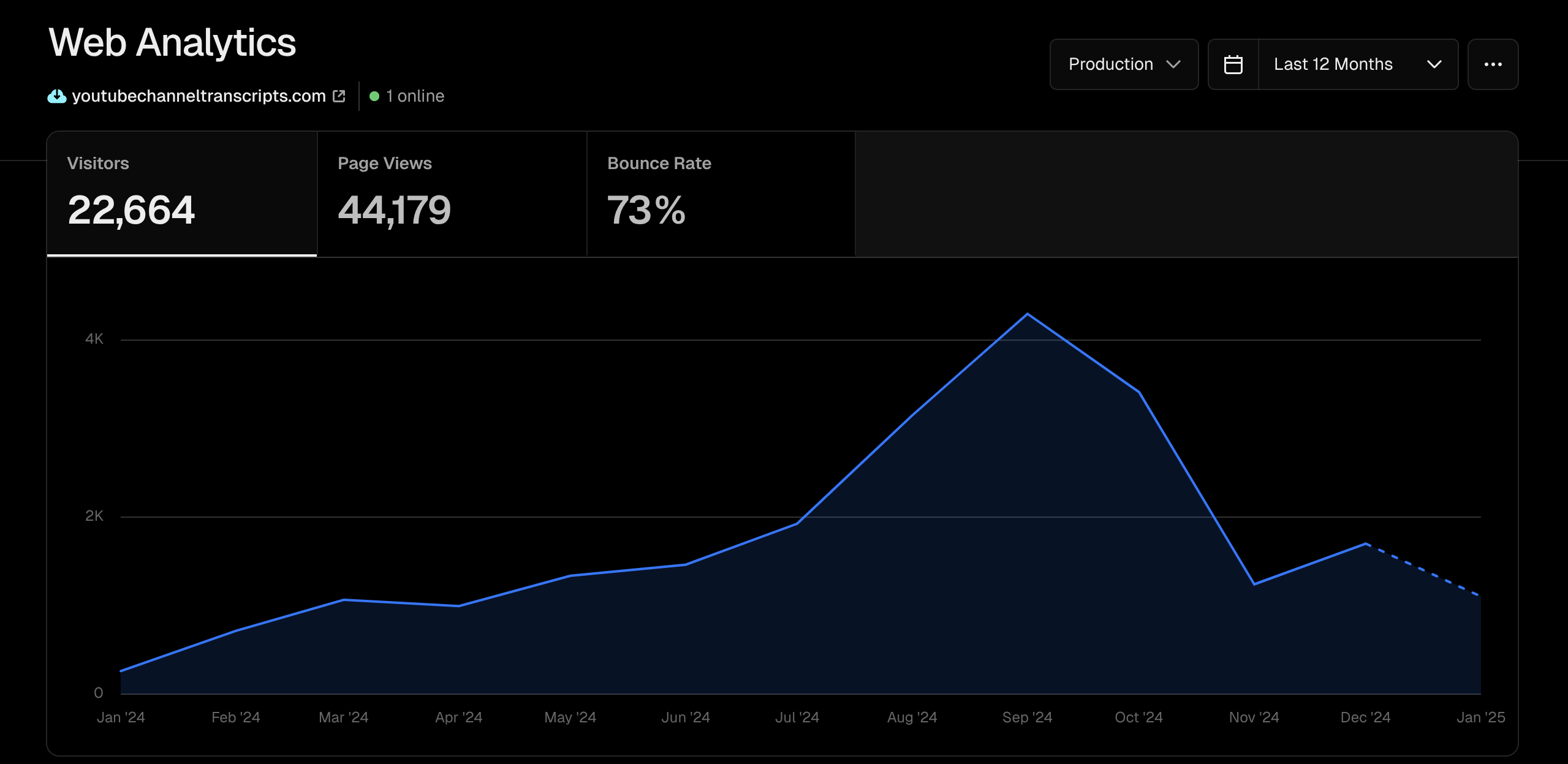
What it did
You paste a YouTube URL, you get a transcript. But the feature people actually cared about was bulk channel downloads. Paste a channel link, pick your format (markdown or plain text), and walk away with every video's transcript in one go.
During the LLM boom, that was genuinely useful. People were scraping text from anywhere they could find it to build training datasets. Want to fine-tune a model on programming content? Paste the freeCodeCamp channel, grab 20,000+ videos’ worth of transcripts, including 10-hour tutorials, and you have a dataset ready to feed into a model. That was a real workflow people were running through ytct.com.
Two people, no funding.
The technical bits
The bulk downloader was the interesting engineering problem. Downloading an entire channel's worth of transcripts in one request isn't something you can do synchronously, so I built a queue system to process jobs in the background and let users pick up the output when it was ready. For large channels that could mean thousands of videos.
Caching helped a lot. Once a transcript was fetched it got stored, so repeat requests for popular videos didn't hammer the API. That also kept response times reasonable as traffic grew.
The server side got messier over time. Traffic spikes from the LLM crowd were unpredictable, and without any budget for proper infrastructure it was a constant balancing act between keeping things fast and keeping costs from getting out of hand.
Why it shut down
Server costs kept climbing and we had nothing coming in. Then Google started restricting YouTube API endpoints that ytct.com relied on. At some point we were spending more time fighting the platform than working on the product. We shut it down.
Looking back
I'm proud of it. Real tool, real users, cost us nothing to start. If I built it again, I'd think about sustainability earlier, especially given the timing. We were sitting in the middle of the AI data rush with no monetization plan.